ServicesStorm Damage Repair
Storm Damage Repair in Cypress
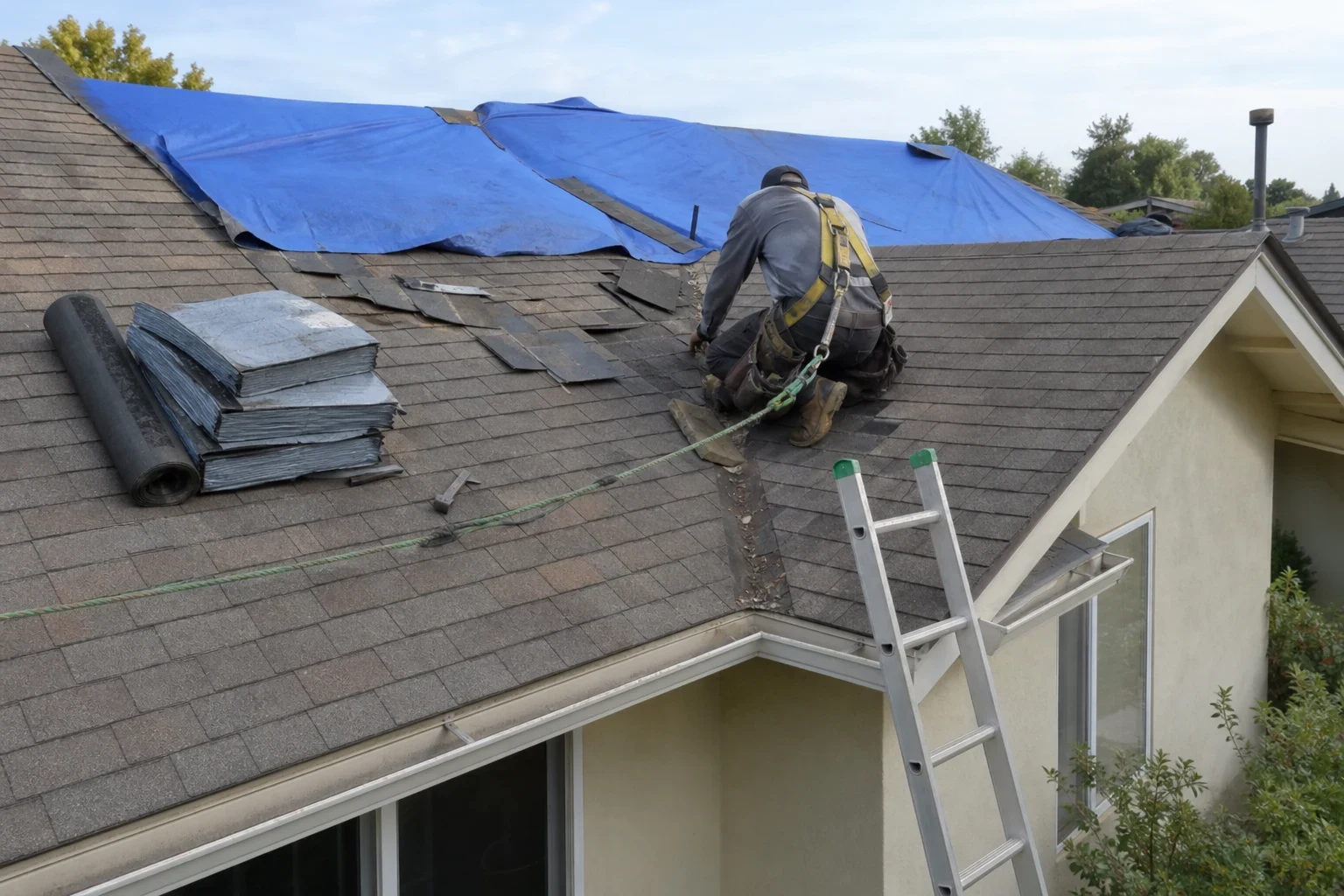
When wind tears shingles loose or rain finds a cracked tile, we come out for a free roof inspection, photograph what we find and fix it right. If you plan to file a claim, we show you the damage and explain how the process works, without promising what your insurer will pay.
Storm Damage Is Not the Same as an Old Roof
Storm damage repair means fixing what one weather event did to your roof. That can be shingles lifted or torn off by wind, tiles cracked or knocked out of place, flashing bent back, or a branch punched through the decking. It is different from normal wear. A thirty-year-old roof that leaks is aging. A newer roof missing a row of shingles after a windy night is storm damage, and that difference matters to your claim.
Our job is to show you which is which. We photograph every damaged spot, mark it on a simple roof sketch and tell you plainly whether it looks like something to take to your insurance company or a repair you would pay for yourself. We work directly with your insurance claim if you file one. The adjuster decides what is covered, not us, and we will never tell you otherwise.
Our owner has 40 years of roofing experience, and that time shows in how damage gets read. Fresh wind creases look different from old ones. A tile cracked by a falling limb breaks differently than one cracked by someone walking on it.
What Our Storm Repair Work Covers
- 01
Free inspection with dated photos
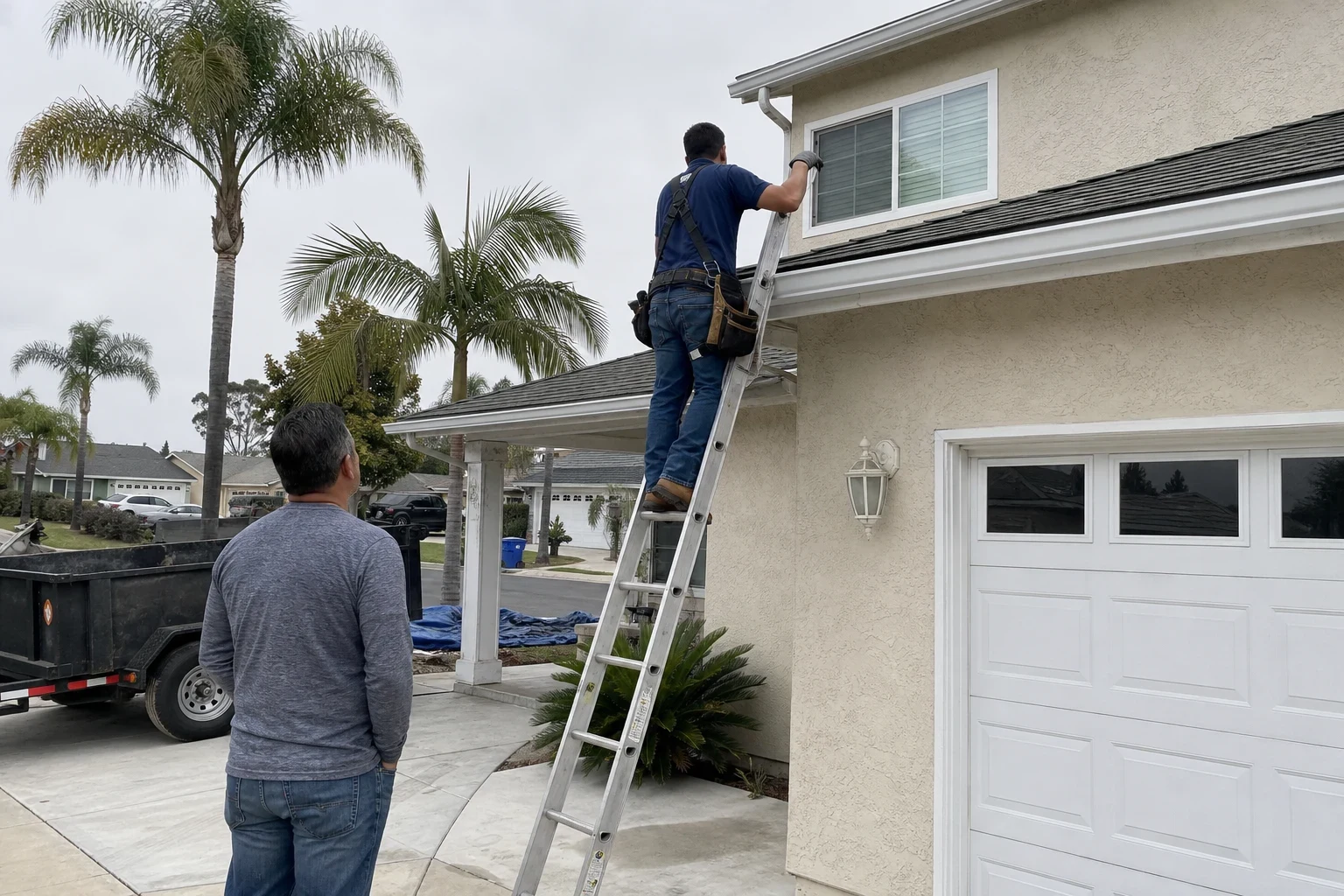
We check the roof surface, the edges, the ridge and the attic underneath. You get photos of each problem, close up and wide, so you and your adjuster can see exactly where it is.
- 02
Temporary cover until repairs
If wind opened up a section, we tarp it and fasten the tarp so it stays put. That keeps rain out of your home while the paperwork or the estimate gets sorted.
- 03
Shingle and tile replacement
We replace torn or missing shingles and do our best to match color and profile. As an Owens Corning Preferred Contractor, we install their shingles when a section needs new material. On tile roofs we reset slipped tiles, swap cracked ones and check the underlayment below.
- 04
Flashing, vents and ridge caps
Wind loves to pry at edges. We refasten or replace bent flashing, loose vent boots and lifted ridge caps, since these are where storm leaks usually start.
- 05
Paperwork your adjuster can use
You get a free written estimate with each repair listed line by line. If you like, we can be there when the adjuster visits and walk the roof together, showing each spot we photographed.
- 06
Gutters checked too
Heavy rain and debris can pull gutters loose or bend them. We look at them during the inspection, and our Gutters page covers that work in more detail.
Questions about Storm Damage Repair?
Call(714) 710-1867Signs the Last Storm Hurt Your Roof
Shingles or pieces in the yard
Any roofing on the ground means something on the roof is now open to the weather.
Tiles out of line
From the street, look for tiles that sit crooked, show a gap or have a corner snapped off.
A new ceiling stain
A brown ring that shows up after a rainy week often means water is slipping past a raised shingle or loose metal somewhere above that spot.
Granules piled at the downspout
A heavy pile of sandy grit after one storm can mean the wind scrubbed the shingle surface.
A branch came down on the roof
Even if the limb rolled off, it can crack decking or break tiles you cannot see from the ground. Stay off the ladder and let us check it.
From First Call to Final Sweep
- 1
Phone us with what you saw
Let us know when the wind or rain came through and what you noticed around the house. We pick a time for your free inspection that works for you.
- 2
We inspect and photograph
We walk the roof, check the attic for wet wood or daylight, and take photos of every problem. Before we leave, we tell you what we found in plain words.
- 3
You get a written estimate
The estimate lists each repair. We explain how your deductible compares to that number and whether filing makes sense, so you can decide with the facts in front of you.
- 4
If you file, we work with your insurer
You open the claim yourself. We can share our photos with the adjuster and, if we find hidden damage once work starts, document it so it can be added.
- 5
Repair day, then a clean yard
Before work starts, we lay tarps over flower beds and set boards where ladders meet the driveway. Once the repairs are done, we run a magnet across the lawn for stray nails. You get after photos of the finished work.
What Changes the Cost of Storm Repair
We price each storm repair from what's really on your roof, and the estimate is written out item by item before work begins. With an approved claim, you typically pay the deductible, though your policy sets that. If you're covering it yourself, Service Finance Company offers financing, subject to credit approval, and we can go over it by phone.
- How much roof was hit
- A few loose shingles on a single slope go quickly. Damage across several sides takes more material, more labor and sometimes more days.
- What your roof is made of
- Replacing tile runs higher than asphalt shingle, and older or discontinued tile can be tough to match.
- Damage below the surface
- Soaked decking or torn underlayment has to be replaced before shingles or tile go back down.
- Slope and reach
- Steep or two-story roofs call for more safety gear and setup, which adds labor.
- Permits on bigger repairs
- Larger sections may need a city permit. When one is required, we get it and list it on the estimate.
Common Storm Damage Questions
Is my insurance going to cover this?
No one can honestly promise that, so be careful with anyone who does. Your policy and the adjuster decide coverage. We give you clear photos and a written estimate so the damage is plain to see.
Who do I call first, my insurer or a roofer?
A lot of homeowners call us first to understand the damage before they file. If it's minor or near your deductible, you might choose not to file. Either way is fine, and the choice is yours.
What if the adjuster overlooks damage?
That does happen, mostly with damage you can't see from the ground. We share our photos and notes and can point out each spot to the adjuster in person. If more damage turns up once the roof is open, we document it so it can go on the claim.
Will a repair do, or is it time for a new roof?
Much wind and rain damage can be handled with spot repairs. If the roof was already worn before the storm, or most of it is damaged, we tell you plainly. Our Roof Replacement page covers what that job involves, and you get an honest answer either way.
After a Windy Night, Start With a Look
We will check your roof, photograph what the storm did and explain your options, including how the claim process works if you need it. We work in Cypress and nearby towns like Los Alamitos and Garden Grove.