ServicesCommercial Roofing
Commercial Roofing in Cypress, Planned Around Your Business Hours
We repair and replace roofs on offices, retail units and small commercial buildings. The first visit is a free inspection. We photograph the trouble spots and put the plan and price in writing. If wind or rain did the damage, we help you document it for your insurer.
Roof Work for the Building You Run
Commercial roofs fail differently than house roofs. Most are low-slope or flat, so water sits instead of running off. Seams open, drains clog with debris and the flashing around rooftop units and parapet walls pulls loose. A small split can soak insulation for months before a stain shows on a ceiling tile.
We look at the whole roof, not just the spot over the leak. Then you get a straight answer: patch it now, or start planning a new roof because the old one has little life left. Our owner brings 40 years of roofing experience to that decision and has seen most of the ways a flat roof gives out.
If a storm caused the damage, we take dated photos and measurements, explain how a property claim usually moves and work directly with your insurance claim. We do not act as your adjuster, and we will not tell you the insurer will pay. We give you a clear record to work from.
What Our Commercial Roofing Covers
Membrane and seam repair
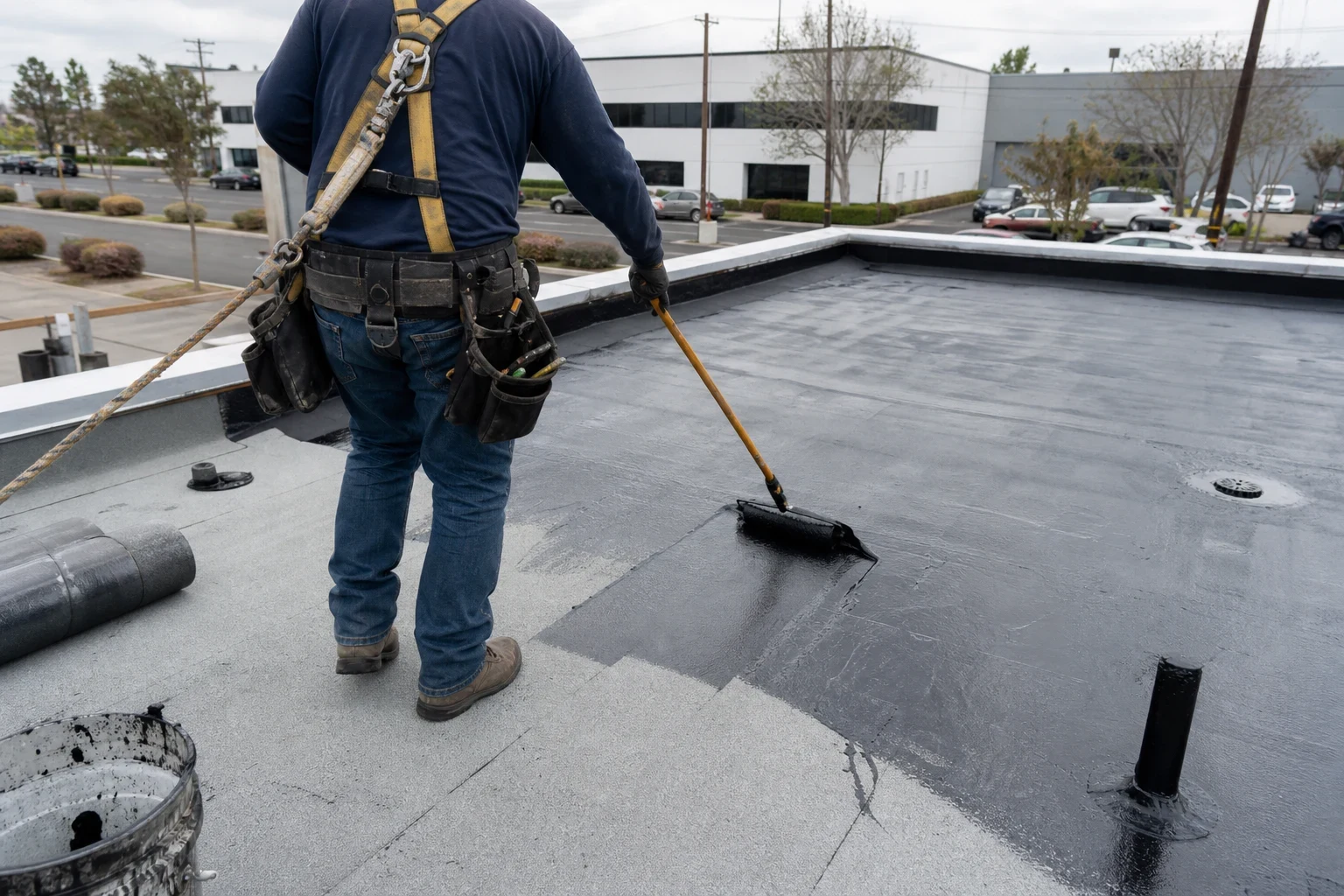
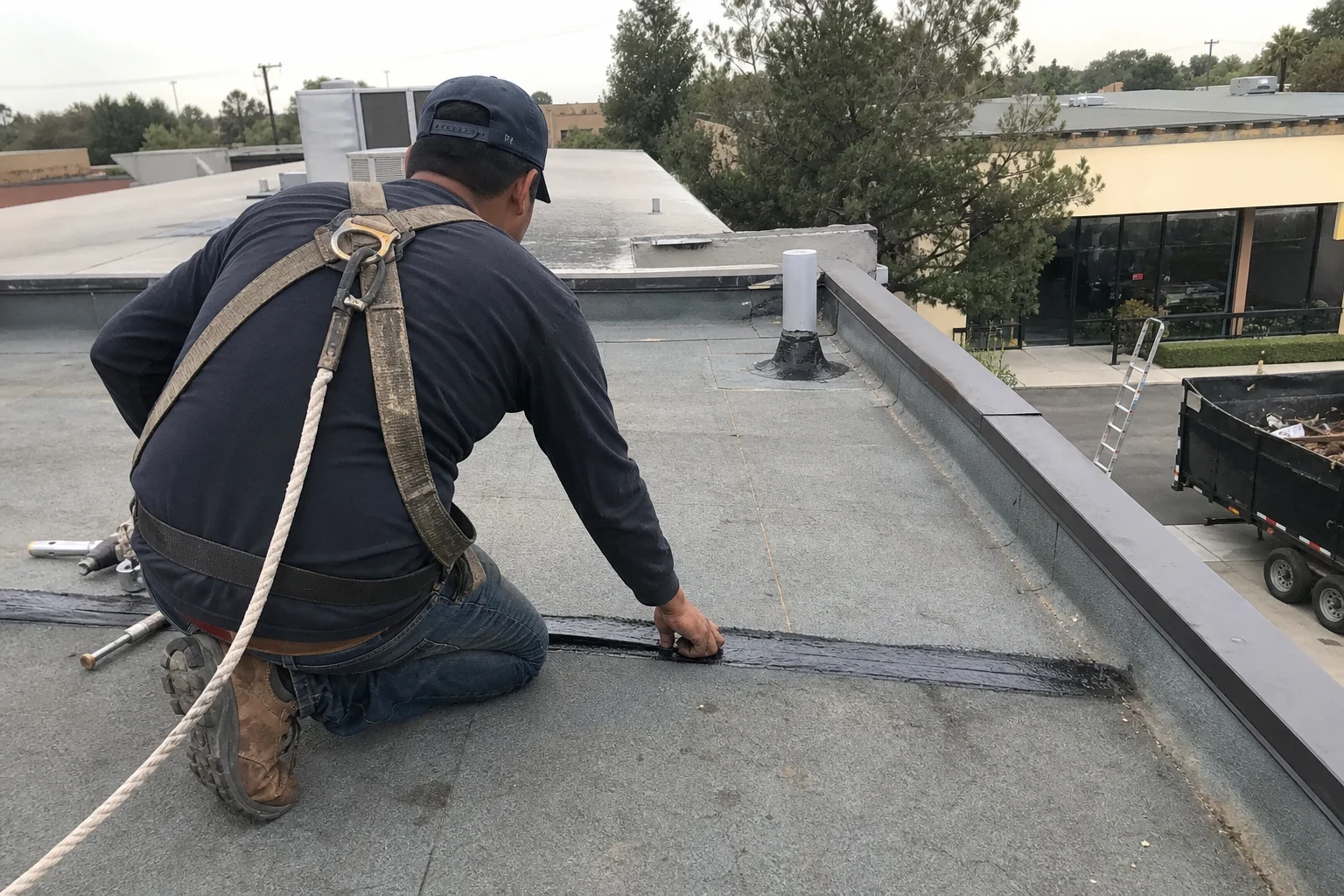
We patch splits, reseal open seams and fix blisters on single-ply and modified bitumen roofs. Repairs are cleaned and primed first so the new material bonds.
Full reroofs
When the roof is worn out, we tear off, check the deck and insulation, and install a new system. On pitched sections with shingles, we install as an Owens Corning Preferred Contractor.
Drains, scuppers and gutters
Standing water is the main enemy of a flat roof. We clear and reset drains and scuppers, and we handle gutters and downspouts so water leaves the building.
Flashing at units and walls
HVAC curbs, vent pipes, skylights and parapet walls take the most movement and the most water. Instead of smearing sealant over them, we pull the tired flashing and build it back properly.
Insurance documentation
After wind or rain, we photograph damage, mark each spot on a roof sketch and write up the repair scope in plain terms you can share with your insurer.
Signs Your Commercial Roof Needs Attention
- Ponding that stays for days
- Water should drain within a day or two after rain. Puddles that linger point to sagging deck, blocked drains or poor slope.
- Stained ceiling tiles
- Brown rings on drop ceilings mean water has already passed through the roof and insulation. The leak is often several feet away from the stain.
- Bubbles and wrinkles in the membrane
- Blisters form when moisture gets trapped under the surface. Left alone, they crack and let more water in.
- Loose flashing after wind
- Santa Ana winds can lift metal edges and peel flashing off parapets. Lifted edges catch more wind each time and spread the damage.
- Patches on top of patches
- If your roof has been sealed over and over at the same spots, the problem underneath was never fixed. That is usually when we talk about a larger repair or a new roof.
What to Expect, Start to Finish
- 1
A look at no charge
We go up top and check drains, seams and flashing, then step inside to see the ceilings. Every problem we mark gets a photo you can keep.
- 2
Written estimate
You get a free, line-by-line scope on paper. It shows what we plan to repair or replace and why. If storm damage is involved, the same write-up supports your paperwork.
- 3
Scheduling around your tenants
We plan noisy work and tear-off for times that keep your doors open. Entrances, parking and walkways stay clear and safe during the job.
- 4
The work and cleanup
Each section we open gets dried in the same day. At the end we clear debris from the roof and the ground, then walk the finished roof with you.
What Sets the Cost of a Commercial Roof
No two buildings are alike, so we set a price only after we've walked the roof. Financing through Service Finance Company is available if spreading out payments helps, with approval based on your credit. Each item is listed on your written estimate, so nothing pops up later.
- Roof area and layout
- Bigger roofs cost more, and so do roofs split up by parapets, different levels and lots of penetrations.
- What's beneath the top layer
- Soaked insulation or soft decking must be removed before the new roof goes on. The full amount only shows once we test and open the roof.
- Which roof system you pick
- Single-ply membrane, modified bitumen and shingles on sloped areas each have their own material and labor costs. We lay out the pros and cons in everyday terms.
- Access and equipment on the roof
- Cramped access, a tall building or HVAC units that need to be raised or re-curbed all call for extra time and gear.
- Permits and scheduling
- A reroof requires a city permit and inspection. After-hours work that keeps your business running can change the price too.
What Building Owners Ask Us
- Will I have to close during the work?
- In most cases, no. Tear-off and loud work go into quieter hours, and entrances stay open. We tell you ahead of time which areas of the property will be active each day.
- Will insurance pay for a new commercial roof?
- That decision belongs to your insurer and your policy. We document the damage with dated photos and a written scope, explain how a claim typically moves and stay involved with your claim along the way. We won't promise an outcome we don't control.
- Should I repair or replace my flat roof?
- When damage is confined to one spot and the insulation below is dry, we usually recommend a repair. When water has spread under big sections, or the roof is already mostly patches, replacement often costs less in the long run. We review the photos with you and explain which way we lean and why.
- Do you handle small commercial and mixed-use properties?
- We do. Many of our commercial jobs are offices, strip retail and small buildings with ground-floor shops. We also work on sloped commercial roofs with shingles or tile.
Get Your Commercial Roof Checked
We will walk the roof, take photos and give you a written estimate at no cost. If storm damage is part of it, you will have a clear record to start your claim.